Few topics are discussed as emotionally and with as many different opinions as the energy revolution — this is actually a very physical topic — and physics is based on hard facts and follows clear rules.
The fear of alleged “power gaps”, the unavoidable “need for conventional generation plants for safe power generation” and “excessive costs of photovoltaics and wind farms”: There are many allegations that create uncertainty. Especially for public authorities and municipalities, which are key players in the local energy revolution, it is crucial to differentiate between sentiment and facts.
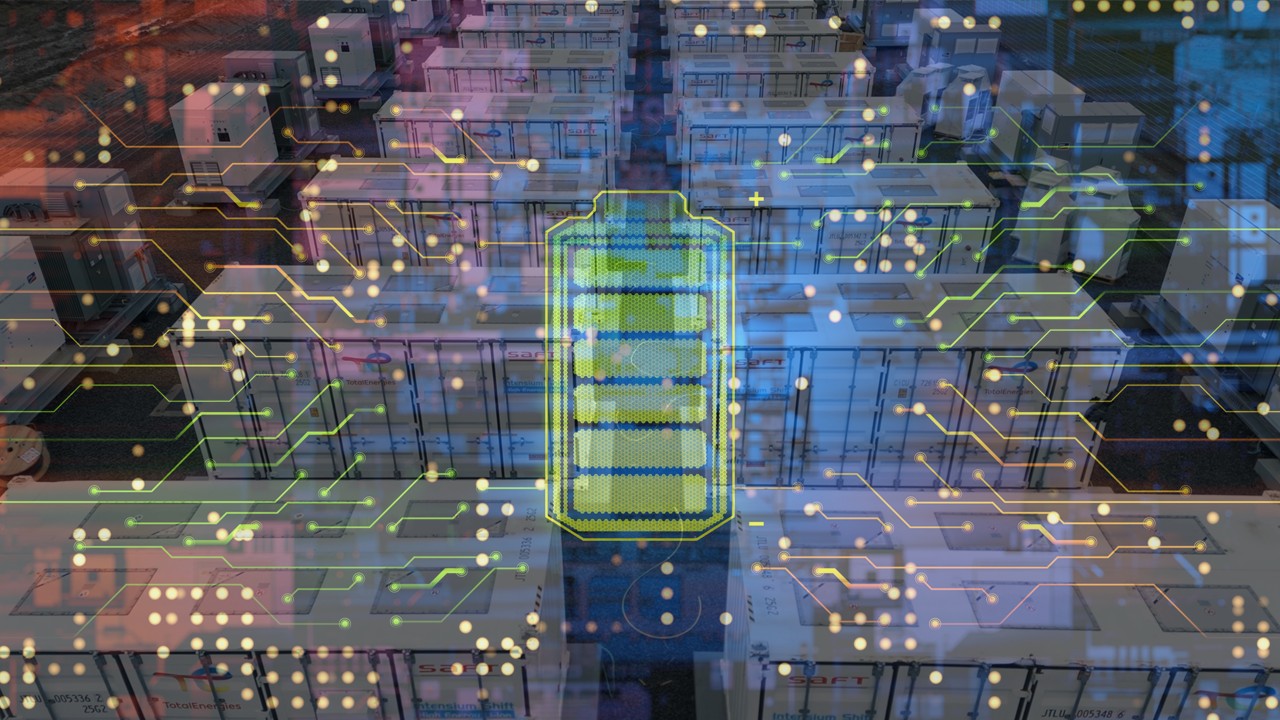
Large-scale battery storage systems impressively show that security of supply, grid stability and the expansion of renewable energies are not contradictory. Although already 57 percent of electricity comes from renewable sources, have doubts: Can electricity be reliably generated from wind and sun? Is the network congested? Do fossil power plants have to come back?
Such questions shape public discourse — but they are often based on outdated ideas. Many challenges have long been solved or have already been solved. In any case, one thing is certain: The issue of energy transition is a complex and multi-layered task. Battery storage systems play a key role in this. They stabilize grids, bridge peak loads and avoid unnecessary costs. So it's time to take a closer look at five of the most common mistakes.
In the purely fossil past of electricity generation, all electricity came from medium-sized and large power plants. Inverter technology and fast digital control technology did not exist. In the last 30 years, not only has the share of renewable energy sources in the global electricity mix developed explosively, but so has the technology itself. Fast data processing, modern measurement and control technology enable production and consumption to react extremely quickly to short-term changes in the power supply.
Until now, large rotating generators have performed this task — their centrifugal mass automatically compensates for the slightest fluctuations and thus keeps the grid frequency stable. This physical effect is known as the instantaneous reserve. However, a market that pays for this service does not yet exist. But it is a mistake to assume that only conventional power plants can provide this stability.
Modern inverters show that there is another way. With the right power electronics Large battery storage systems react precisely to frequency deviations, can absorb or release energy within milliseconds and thus actively contribute to grid stability.
That also has the program “Intelligent Energy Showcase” shown by the Federal Ministry of Economics: Storage systems can make a measurable contribution to frequency support. What has been missing so far are clear technical requirements and an appropriate market mechanism that also takes non-conventional systems into account for their network support performance.
It has long been clear that market participants, network operators and the regulatory authority are aware that storage systems will and must be a central part of the energy system. Depending on the scenario, transmission system operators calculate Network development plan 2037/2045 with an expansion to 18 to 36 GW by 2037 — and up to 44 GW by 2045. The storage capacity could then be up to 175 GWh.
The great concern about an impending electricity shortage serves as an argument to push ahead with the renewed expansion of fossil power plants.
In reality, 120 GW of generation capacity were installed in 1995 — 260 GW in 2025. The real challenge is not a lack of generation capacity, but a lack of flexibility.
This is exactly where modern storage solutions come in. They absorb excess energy from wind and solar systems — energy that would otherwise be limited and lost unused. As soon as demand increases or supply declines — for example on windless nights or in the evening hours — they release this energy within fractions of a second and thus support the grid and avoid price spikes.
This flexibility makes storage a key element of the future power supply. Numerous projects are currently being developed throughout Germany aimed at increasing security of supply. This should not be achieved through new fossil power plants, but through decentralized, rapidly controllable storage systems. The more regulatory and political support these systems receive, the less demand there is for fossil reserve power plants such as gas-fired power plants — and therefore also for corresponding subsidies. This has a long-term stabilizing effect on electricity prices and reduces dependence on fossil fuels.
The momentum of the expansion is already apparent: In 2024 alone, there was a loud Market master data register 16.2 GW of new photovoltaic power connected to the grid — a record. In parallel, the installed capacity of large battery storage systems is significantly increasing. The Federal Association of the Solar Industry calls for an expansion to 100 GWh of storage capacity by 2030.
It is repeatedly claimed that a high proportion of renewable energy endangers the stability of the power grid. In fact, there is a measurement value for the availability of the power supply that is recorded annually, the so-called SAIDI value. This shows how many minutes per year a consumer in Germany was not supplied with electricity. What is exciting about this figure is that it has fallen massively since the start of the energy revolution. In 2006, the figure at the medium-voltage level was 18.67 minutes, in 2024 it was 9.2 minutes.
The actual problem with wind and solar power currently lies in making it usable in very windy or sunny hours. Many wind and PV parks are currently being shut down by the grid operator if the grid is unable to absorb the energy. As a rule, however, operators continue to receive remuneration — even if they do not produce at all. This, of course, burdens end users.
The result: so-called redispatch costs, some of which are dizzying. In 2024 alone, these add up loudly Federal Network Agency to around 2.7 billion euros. Fluctuate monthly The costs of between 32 and 477 million euros — a clear sign that there is not a lack of electricity but of flexibility in the grid.
This is exactly where battery storage systems can start if they are properly taken into account by network operators in network operation. They absorb excess electricity instead of leaving it unused and feed it back in when needed.
The potential of this technology is also demonstrated by current studies. According to this, network operators are already saving between 3 and 6 euros per kilowatt of installed battery capacity per year in redispatch costs. These figures are confirmed, among other things, by an analysis of Frontier Economics. The benefits would be even greater if suitable price signals were to specifically promote the network-serving effect of storage systems.
The Federal Network Agency has recognized this lever and with the program “Use instead of regulation 2.0” started to systematically integrate storage into congestion management.
On the contrary: Large-scale battery storage systems not only relieve the energy system — they save money, according to a study by Frontier Economics From 2024, at least 12 billion euros in economic costs by 2050. They take on tasks that have so far been fulfilled by expensive gas-fired power plants, reduce wholesale prices, reduce price fluctuations on the electricity market and at the same time strengthen independence from fossil raw material imports — all without government funding or subsidies.
The analysis also shows that market-driven expansion of storage facilities is possible provided that regulatory hurdles are removed. The use of large batteries has a particularly significant effect on the wholesale electricity market: They selectively absorb surpluses of electricity and release them again in times of high demand. This cushions extreme price fluctuations — both downwards and upwards.
When renewable energy is available in abundance, storage systems prevent prices from falling into negative territory. When there is a shortage, they provide energy and dampen price spikes. This not only ensures security of supply, but also more stable markets and easier to plan energy costs. Electricity that would otherwise be given away or reduced remains in the system and is available when it is needed — a clear economic advantage for providers and consumers alike.
Storage systems are still regarded as supplementary technology in many places, and they already form the backbone of a climate-neutral power supply. They do much more than just compensate for short-term fluctuations. Even in long-lasting dark spells, they contribute to the need for significantly fewer fossil reserve power plants.
This is also used in Network development plan 2037/2045 expressly recognized. Large-scale battery storage systems with an output of 21 to 44 gigawatts (GW) and a capacity of up to 175 gigawatt hours (GWh) are firmly planned there by 2045. This underlines that this is not a bridging technology, but a permanent part of the energy infrastructure.
Technological development is confirming this trend. Storage systems are constantly becoming cheaper, more powerful and more durable. In the electricity market paper “Power market design of the future” From 2024, the Federal Ministry of Economics (BMWK) makes it clear that storage systems are on equal footing with other key technologies such as heat pumps, electric cars and electrolyzers — and are essential for a flexible, climate-neutral electricity system.
Storage is also essential for sector coupling. They bridge the gap between the areas of electricity, heating, mobility and industry by ensuring that renewable energy is used flexibly exactly where it is needed. In short: Storage systems are not a temporary tool, but a mainstay of the energy revolution. They create reliability in the system, reduce dependence on fossil imports and lay the basis for a stable, resilient power grid of the future.
The energy revolution is not being slowed down by technical limits, but by myths that have long been refuted. Large-scale battery storage systems prove that security of supply, grid stability and climate protection go hand in hand — and that municipal actors can play a key role in this.
For the full potential of this technology to be effective, clear political and regulatory signals are finally needed. Storage solutions are available, proven and cost-effective — what is missing is a consistent framework for expanding them. Anyone who wants to advance the energy revolution locally should break away from old ways of thinking — and focus on solutions that are already working today.


.avif)