The Energy Revolution poses new challenges for the electricity system: In the past, only energy consumers could not be controlled or planned. With an increasing share of renewable energy, the feed-in is now also dependent on weather conditions and is therefore volatile. However, the demand for electricity from households and industry is largely independent of the generation potential of renewable energies. This increases the demand for So-called short-term flexibilities, which make it possible to reconcile supply and demand for electrical energy.
In recent years, Kyon Energy has established itself as one of the leading developers of large storage projects. With the next strategic step — taking on the role of Independent Flexibility Providers (IFP) — The company is significantly expanding its position in the storage sector. But what exactly does that mean? Why is this step so important for Kyon Energy?
This blog article gives an insight into the role of independent flexibility providers, highlights the motivations behind Kyon Energy's decision and shows how this change can have a lasting impact on the market.
The Federal Network Agency (BNetzA) defines flexibility in the electricity system as “the change of supply or withdrawal in response to an external signal (price signal or activation) with the aim of providing a service in the energy system.”
An Independent Flexibility Provider (IFP) Is a central player in the energy market that uses specifically controllable energy systems (such as battery storage systems), flexible industrial processes or controllable power plants to react to short-term price fluctuations on the energy markets. This ability to provide flexibility is critical to ensuring the balance between supply and demand while seizing economic opportunities.
Flexibility in Germany is currently largely controlled by the uniform electricity price throughout Germany. This means that investment decisions are heavily based on price signals. Price fluctuations on the German energy market are currently particularly pronounced. On the one hand, this opens up significant revenue potential for players such as IFPs, as they can benefit from high price differences through clever action. On the other hand, these strong fluctuations are a clear signal of the lack of flexibility in the overall system. The bigger the price jumps, the more difficult it is to balance supply and demand in real time — an indication that additional flexible capacity is urgently needed.
In the long term, the integration of flexibility options not only contributes to Stabilizing the power system For, but also for the efficient use of renewable energies. Technologies such as battery storage, among others, can form the basis for flexibility offers. These represent an independent pillar in the future energy system, alongside producers and consumers. Your task is to store, release or move energy in a targeted manner — depending on predefined price signals. IfPs play a key role here by bridging the gap between volatile production and stable supply.
The transition from pure project developer to operator of battery storage systems, and thus IFP, marks a decisive strategic milestone for Kyon Energy. By operating its own battery storage systems, the company not only assumes responsibility for the technical implementation, but also for the long-term use of the storage systems in the German energy system — and is thus actively involved in shaping this.
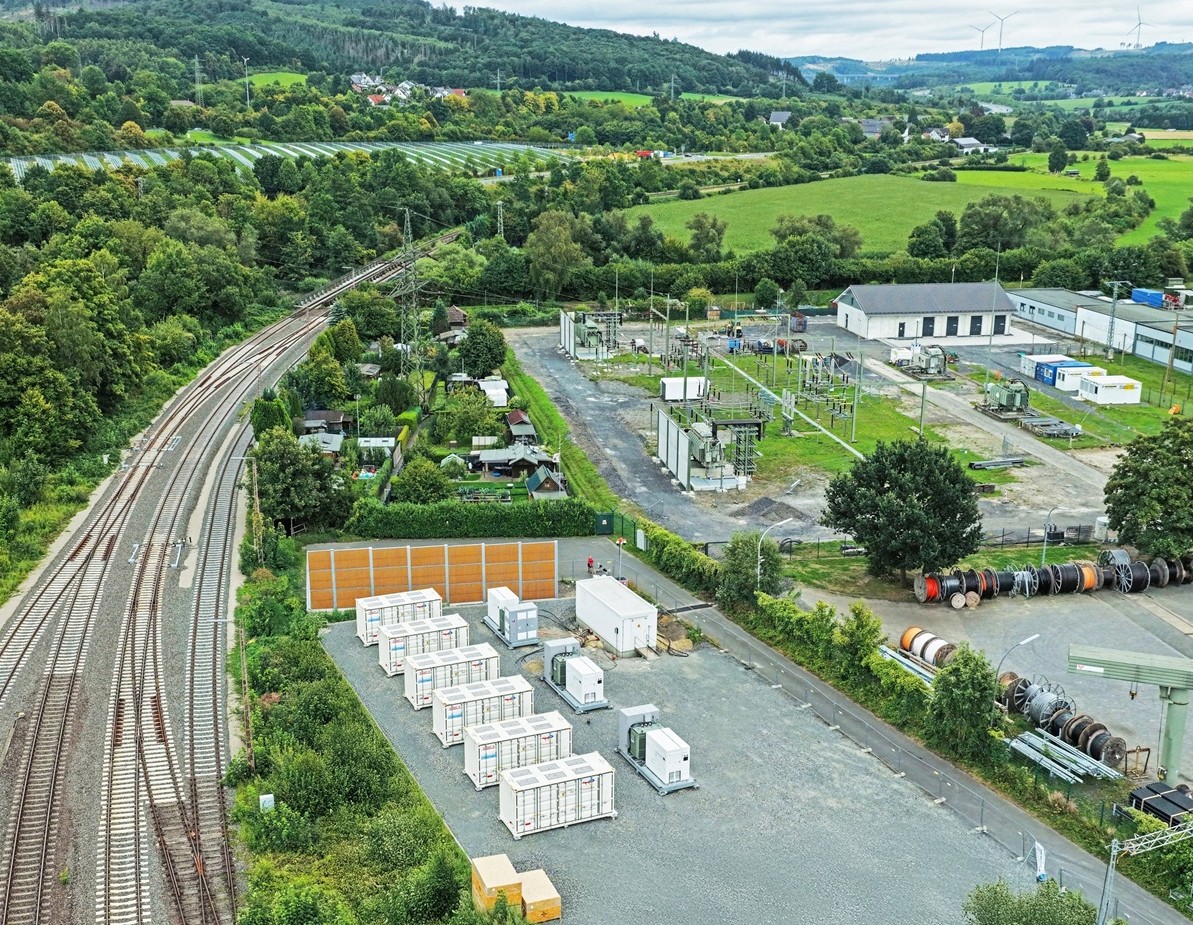
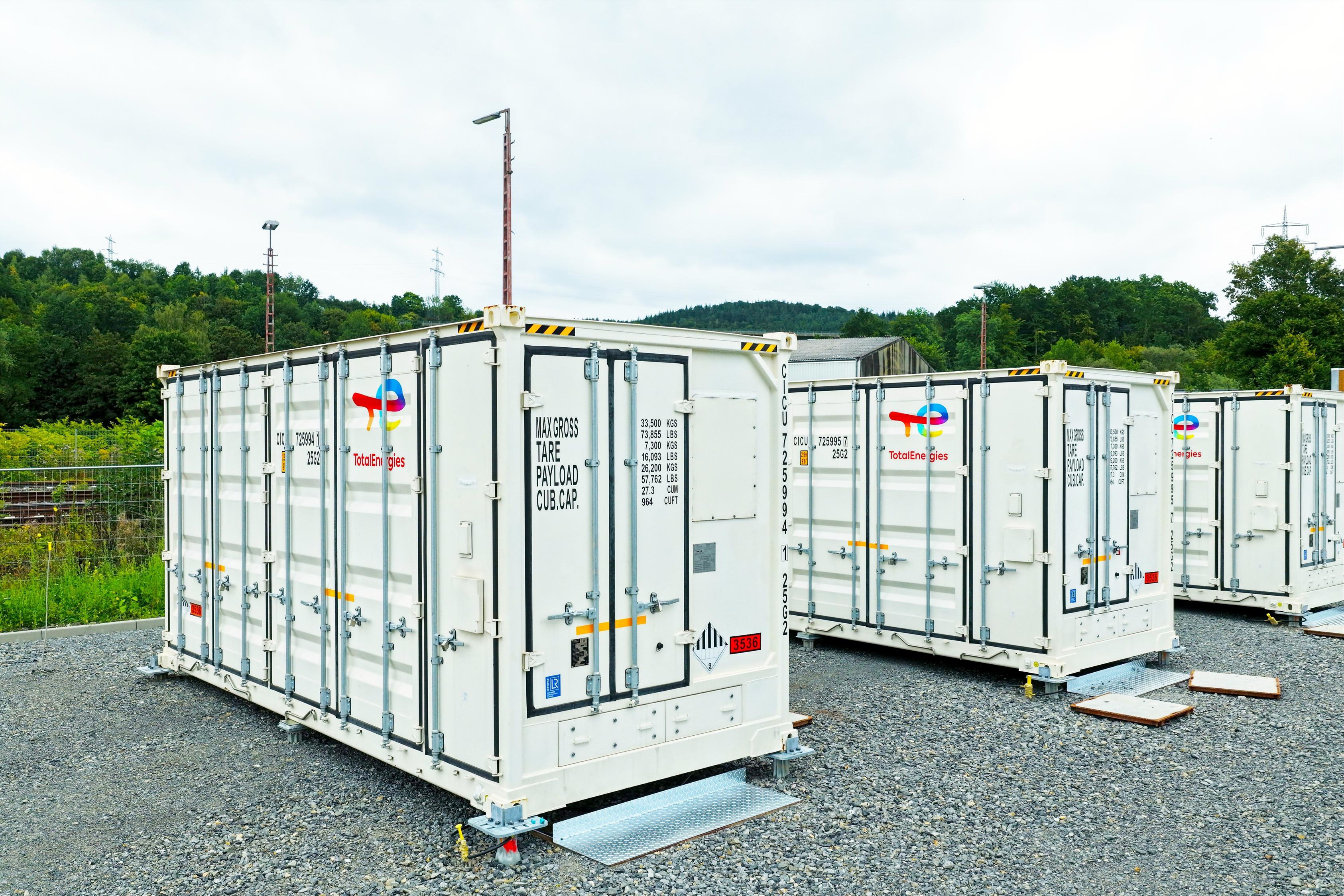
With the commissioning of the storage facility in Arnsberg, this strategic change is becoming tangible for the first time. The Plant Marks the Operational Starting Point for Kyon Energy as an Operator of Battery Storage Systems. The battery storage system can absorb amounts of energy in the short term and release it again as needed — a key contribution to system stability in an increasingly volatile power system. In addition, the storage system will be able to provide control power and thus contribute to stabilizing the grid frequency in its control area. The six battery storage containers were placed on screw pile foundations in August 2025 — with millimetre accuracy using a 400-ton crane.
What began in Arnsberg as Kyon Energy's first own storage project will become a blueprint for further projects in 2026: The experience gained there in operation, technical implementation and communication with network operators and authorities is directly incorporated into the implementation of larger storage sites in Germany. The current project under construction in Dahlem with 100 megawatts of storage capacity and 203 megawatt hours (MWh) of storage capacity will also strengthen the IFP portfolio. Commercial operation is planned for October 2026.
A whole series of further construction sites and start-ups are planned for the coming year. Kyon Energy Plans By the end of 2026, a further 5 battery storage systems with a total output of around 400 megawatts Connecting to the grid — a significant contribution to making the energy system more flexible and integrating renewable energies. Further plants are already being specifically planned. The aim is to become one of the largest operators of battery storage systems in Germany in the medium term.


In an energy market that is increasingly dominated by renewable energy sources, flexibility is becoming a new key resource. Independent flexibility providers help smooth out electricity prices and balance supply and demand. By specifically feeding in or storing energy, peak prices, which make the market more efficient and ultimately lower the price of electricity for end users, can be absorbed.
In addition to this balancing function, battery storage systems also play a role in Provision of system services. Thanks to their technical properties, they can be used particularly well to ensure the stability of grid frequency and voltage when necessary.
However, a targeted incentive effect is needed in order to be able to use the potential of battery storage also to combat network bottlenecks: Mechanisms must be established that link overarching system requirements with local network utilization. This would make it possible to Flexibility potential So to use existing network infrastructure more efficiently. Battery storage systems are one of the central puzzle pieces in the complex power system of the energy revolution. However, due to inadequate framework conditions, they are not efficiently able to fully exploit the advantages in the power grids in addition to their advantages on the electricity market. On the contrary, some network operators now even regard them as problematic. Legislators and regulators must act urgently here.
Kyon Energy as IFP is now facing the task of finding suitable tools with the aim of promoting regional value creation and at the same time improving the integration of renewable energies and local grid stability. With the expansion of battery storage systems and the intelligent control of energy flows, central network logic is increasingly being achieved by Decentralized solutions replaced. This strengthens regional supply security and opens up new business models — for example for municipalities, industry and prosumers. Battery storage systems help to avoid grid bottlenecks and reduce the need for expensive network expansion.
The increased number of pure IFPs in Germany is much more than a technical upgrade — it is an important step towards a sustainable energy landscape. For Kyon Energy, this change means a profound development: From Project Developer of Innovative Storage Systems to Long-Term Players in the Energy Market.
By operating its own battery storage systems, Kyon Energy assumes responsibility for the stability, efficiency and sustainability of the energy system. At the same time, a new chapter full of opportunities is opening up — for the company, for partners and for the energy revolution as a whole. It offers the company the opportunity to position itself sustainably and broadly in the storage sector and to support its projects from the first to the last development step. The Coming Years Will Show How Much Independent Flexibility Providers Can Change the Market. Kyon Energy is ready to help shape this development — technologically, economically and socially.


.avif)